
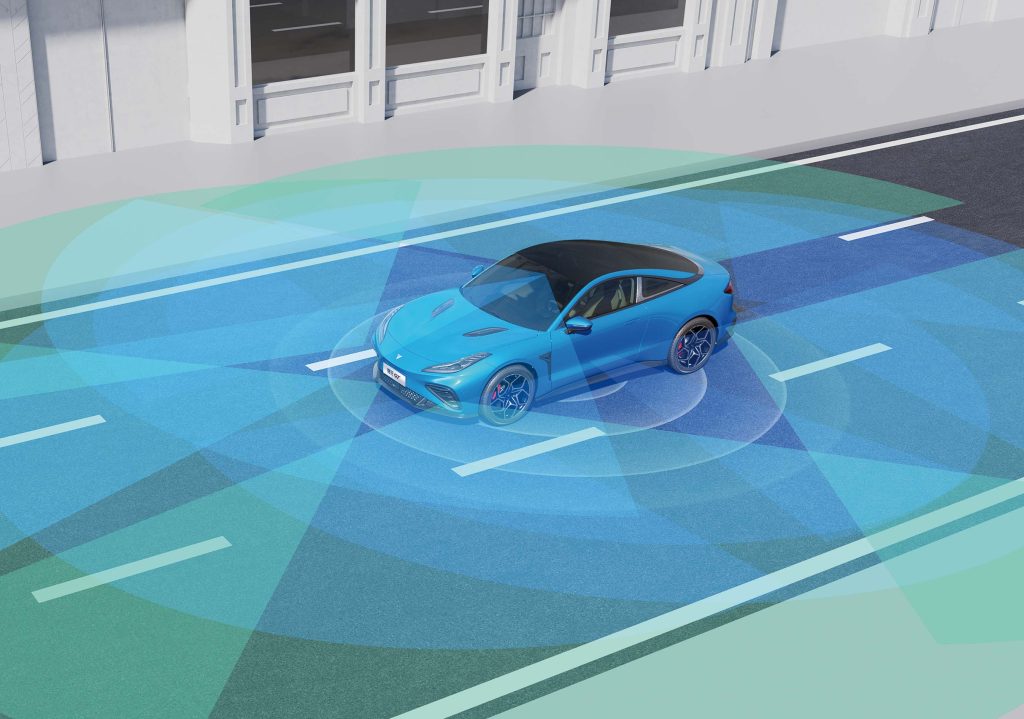
Comparative snapshot: budget boxes versus high-fidelity domain controllers
Choosing hardware for an intelligent transport fleet is a trade-off: cheap controllers can keep initial spend low, but they crank up long-term risk and operational friction. A real-world example comes from the Midwestern U.S. corn belt, where farms that moved from basic autosteer rigs to higher-integrity controllers saw fewer line-of-sight and localization issues on tight rows — safer runs, fewer reworks. Lean systems often skimp on a hardened domain controller and robust CAN bus isolation; higher-fidelity units bring GNSS-grade timing, deterministic I/O, and clearer error boundaries. If you’re also coordinating implements, integrate a tractor autosteer system to avoid mismatches between guidance and implement commands.
Why high-fidelity hardware changes the risk profile
High-fidelity domain controllers aren’t flashy — they do the boring, critical work: stable RTOS scheduling, stronger sensor fusion, and certified interfaces for braking and steering. That stability reduces unexpected failovers and simplifies diagnostics for field technicians. For precision ag deployments, pairing a reliable controller with a vetted precision agriculture system shortens calibration cycles and improves repeatability across runs. The result: fewer shutdowns, less crop damage, and predictable uptime that makes the capital spend show returns faster than you might expect.
Cost versus risk: practical comparison and lifecycle math
Think in three buckets: acquisition, integration, and incident cost. Low-cost kits win acquisition but rack up integration time and expensive incident responses — swapped sensors, emergency recalls, or field repairs. High-fidelity hardware often has higher acquisition numbers but lowers integration complexity and incident frequency. Over a 3–5 year fleet cycle, that shorter mean time to repair and clearer failure modes often tilt the total cost of ownership in favor of quality controllers and a hardened autonomy stack. Procurement teams should model repair frequency and technician hours, not just sticker price.
Implementation pitfalls, alternatives, and real technician notes
Common mistakes are predictable: under-spec’d I/O, ignoring electromagnetic compatibility, and treating software updates as optional. A smart alternative is modular upgrades — swap the compute module while keeping the wiring harness and safety relays intact — which preserves certification work and minimizes downtime. Field techs often prefer systems with good telemetry that clearly map error codes to physical faults — it saves hours. — Also build redundancy for the most critical outputs; single-point failures on steering or braking are non-starters in service fleets.
Three golden rules for capital allocation and hardware choice
1) Measure Mean Time Between Failure (MTBF) and translate it into field hours: prioritize hardware that demonstrably reduces on-farm interventions per 1,000 hours. 2) Require deterministic behavior from the controller: look for RTOS scheduling guarantees, clear watchdog behavior, and deterministic CAN bus arbitration. 3) Validate integration cost: quantify hours for calibration, certification, and field support — then favor options with lower integration friction even at a higher upfront price.
Those three metrics — downtime impact, deterministic behavior, and integration cost — give procurement and engineering a clear scorecard for investment decisions. Archimedes Innovation ties those threads together by offering hardware and integration patterns that reduce repair cycles and simplify certification, making capital spend count where it matters. —

