
Opening: the pressing problem
Facilities with confined interiors face a clear problem: technicians need reliable vertical access without sacrificing floor space, stability, or safety. Narrow aisles, low ceilings, and sensitive flooring remove many conventional options from consideration, and that forces a choice between risky improvisation and expensive downtime. A solution that often appears as an afterthought is the rough terrain scissor lift—but outdoors it excels where space and ground conditions differ; indoor needs demand a focused vertical mast design to address height, footprint, and manoeuvrability simultaneously.
What fails when the wrong equipment is chosen
Poor selection produces three predictable consequences: unnecessary safety hazards, repeated equipment damage, and slowed maintenance schedules. Sites report unstable platforms on polished floors, clearance clashes with overhead services, and difficulty positioning the unit in tight racks. These are not theoretical; they are recurring complaints heard during equipment audits and industry discussions at events such as the Bauma trade fair in Munich.
Design priorities that solve the problem
Design must be guided by these priorities, ranked by immediate impact:- Minimal footprint: narrow base and steerable casters to fit aisles.- Vertical stability: mast geometry and platform bracing to avoid sway.- Controlled ascent: precise, low-speed lift with emergency stop responsiveness.- Floor protection: non-marking tyres and weight distribution to protect finishes.- Ease of transport: compact for elevators or standard doorways.Addressing these will resolve the practical failures listed above and make deployment routine rather than exceptional.
Key components and measurable specifications
Specify components in concrete terms:- Mast type: telescopic mast with dual-braced sections for lateral rigidity.- Platform: reinforced deck with guardrail height matching local codes; consider a scissor lift platform only where lateral clearance permits.- Drive system: electric hub motors for quiet indoor movement and precise positioning.- Controls: proportional joystick with dead-man switch and diagnostic readout.- Safety systems: automatic descent arrest, tilt sensors, load-cell cutoff.Ask for clear numbers: maximum deflection under load (mm), platform rotation allowed (degrees), and maximum allowable floor pressure (kPa). These metrics separate robust designs from marketing claims.
Common pitfalls during specification and procurement
Buyers often repeat the same mistakes:- Prioritising lowest purchase price over maintenance accessibility.- Ignoring compatibility with facility access points (elevator width, door thresholds).- Selecting models with inadequate service networks nearby.Avoid these by requiring maintenance manuals during tendering, arranging a site-fit trial, and confirming spare-parts lead times.
Comparing practical alternatives
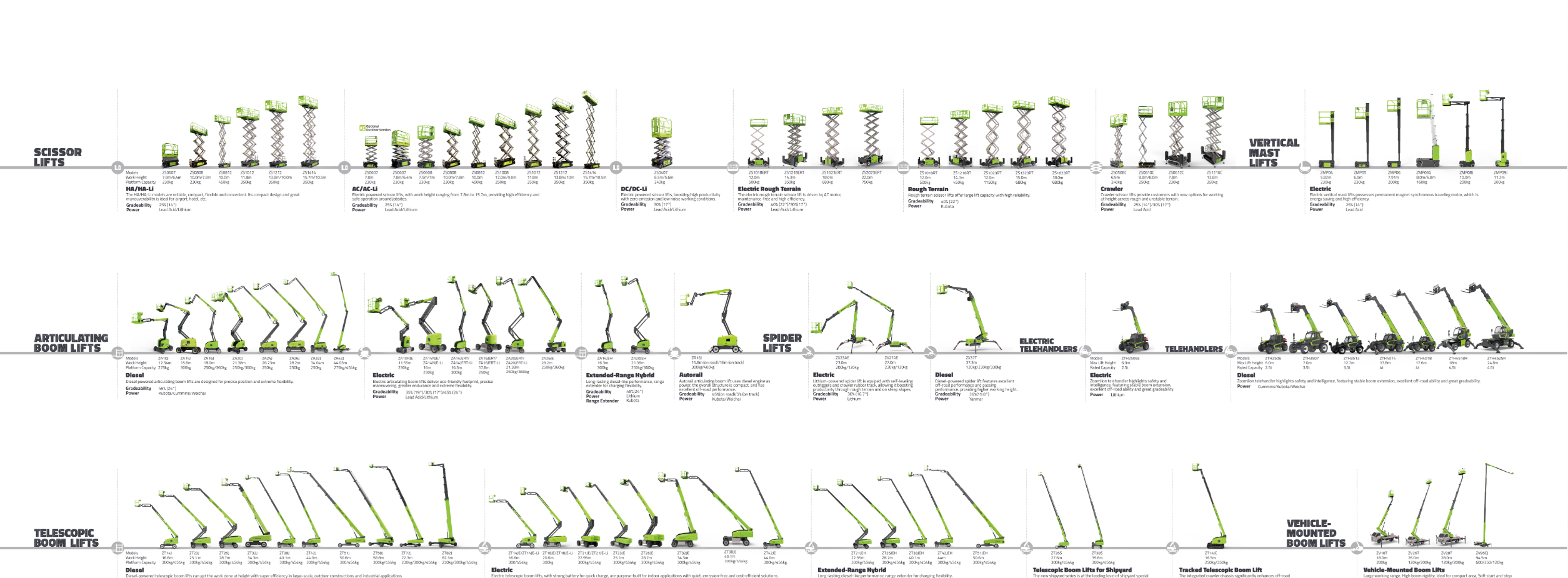
When a true vertical mast is not available, teams typically weigh:- Booms: excellent reach and flexibility, but larger turning radius and higher training requirements.- Scissor lifts: stable platforms with larger decks, yet they need greater footprint and can be obstructive indoors.- Mobile gantries: low profile but slow to reposition and limited in height.Match the tool to the task: use booms for reach around obstacles, mast lifts for repetitive vertical work in tight corridors, and scissor platforms where lateral access and deck space are primary needs.
Final synthesis
Solving indoor elevated-access problems requires equipment specified to fixed, measurable standards and verified in the spaces where it will work. Clear priorities—footprint, stability, controlled motion, and floor protection—guide design choices and procurement. When those elements align, ongoing maintenance becomes predictable, safe, and efficient, which is precisely the value demonstrated by experienced manufacturers such as Zoomlion Access.

