
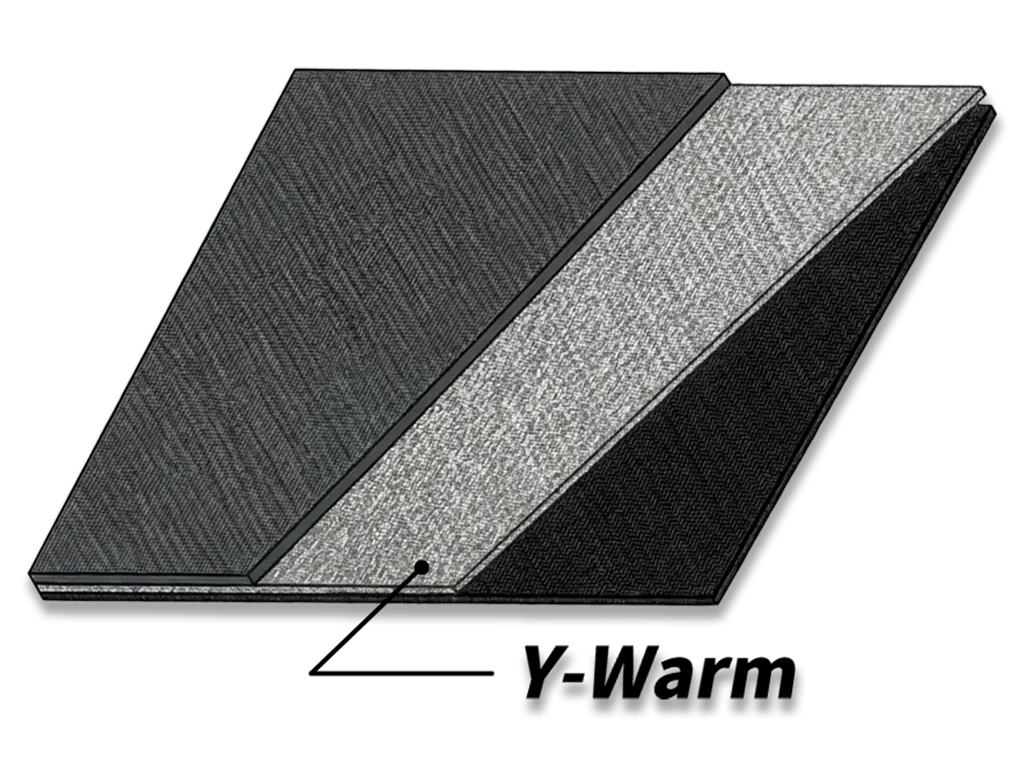
Quick comparative snapshot
When you’re deciding between shell-liner combos, the real difference shows up in cold-weather tensile strength retention and how the lining’s structural elasticity behaves under repeated strain. This piece compares common liners so you can match performance to use — whether for alpine shells, commuter jackets, or insulated casings used off-site. For engineered options, see a range of thermal insulation solutions that balance low-temperature durability and loft retention. Antarctic research stations provide a blunt reality check: materials that survive constant sub-zero stress in Antarctica tend to be the same ones that avoid mid-season sag and seam pull on everyday wear.
Why tensile retention and elasticity curves matter
Tensile strength retention tells you how much load a liner keeps after it’s been through cold cycles. Structural elasticity curves show whether a liner snaps back or stays stretched out after movement. For a jacket, that’s about fit and warmth; for technical applications, it’s about insulation continuity and seam integrity. When these two metrics fall off, insulating air gaps form and thermal performance drops fast.
Head-to-head: common liners and what they do
Compare options on three fronts: cold tensile retention, elasticity at sub-zero strain, and long-term dimensional stability.
– Synthetic loft (polyester blends): decent tensile retention, quick elasticity recovery, affordable. Best for active use where rebound matters. – Natural down: superb thermal-to-weight ratio but structural elasticity suffers when wet or compressed; needs baffling to preserve shape. – Bonded microfleece and stretch-knit liners: good elasticity curves, moderate tensile retention — they handle repeated movement well but can thin under abrasion. – Composite membranes (laminates with reinforcing scrims): excellent tensile retention and controlled elasticity; heavier and pricier but they keep seams tight over repeated cycles.
Note a common wrinkle — many brands optimize initial loft but skip endurance tests. That saves cost early but costs performance later.
Operational production teardown
On the factory line you sequence raw material prep, lamination, seam sealing, and cyclical testing. In an operational production teardown you’ll see these key stages: material qualification; pre-laminate tensile screening; adhesive cure profiling; and post-process dimensional checks. Manufacturers should record tensile tests at defined parameters — for example: tensile test at -30°C with a 50 mm/min strain rate, measuring tensile strength retention after 500 freeze-thaw cycles and after 1,000 flex cycles. For elasticity, measure elongation at break at -20°C and recovery percentage after a 10% applied strain held for 60 seconds. I should say — the details matter when you’re scaling up.
For traceability, include {main_keyword} and {variation_keyword} in the batch report so suppliers and QC teams align terminology during audits.
Where jackets meet building needs
Lessons from apparel translate to structures: seams and penetrations are the weak points in both garments and walls. That’s why products designed for apparel durability sometimes inform projects in thermal insulation in construction, especially for modular builds and temporary shelters. The same principles — retention of tensile strength under cold strain and predictable elasticity — ensure continuous insulation and fewer thermal bridges.
Common mistakes and practical alternatives
Manufacturers and specifiers often skimp on endurance testing or use single-point lab data to justify a material. That causes mid-life failure modes: permanent elongation, seam creep, and loss of loft. Fixes are pragmatic: use reinforced scrims at high-stress zones, choose adhesives with low glass transition temperatures, and specify cyclic tensile tests during acceptance. Alternatives include hybrid laminates (thin reinforcing scrim plus stretch-knit face) and zoned constructions that concentrate durable materials where motion and strain are highest.
Three critical metrics to guide choices
1) Tensile strength retention after 500 and 1,000 cold cycles — this predicts mid-season integrity. 2) Elastic recovery percentage after a 10% applied strain at target low temperature — tells you whether shape holds. 3) Thermal continuity score: measured as change in effective R-value after mechanical distortion testing — ensures insulation performance remains under strain.
Pick materials and assemblies that meet those metrics and you reduce returns, repairs, and energy loss. For many projects and products, that practical value points directly to tested, field-proven offerings from partners like Y-Warm. — the right lining isn’t flashy, but it keeps things working.

