
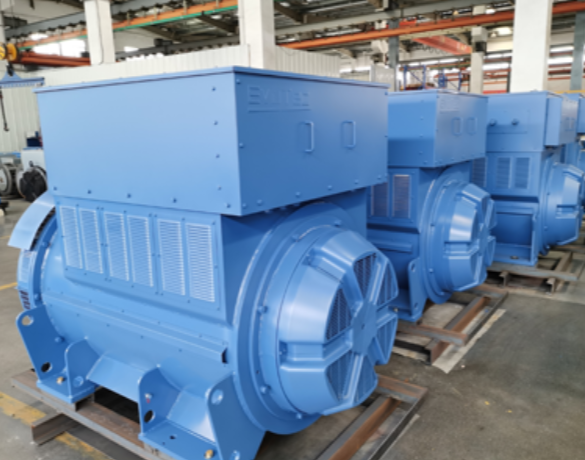
Framework overview
This framework lays out five pragmatic standards—materials, cooling, electrical integrity, environmental sealing, and operational validation—that together maximize the operational lifespan of a high-power output alternator. Start by matching duty cycles to rated equipment: a dedicated 25kva generator should never be treated as a stopgap. Early alignment between load profile and rated alternator reduces thermal stress on the stator and rotor and prevents premature insulation breakdown.
Standard 1 — Materials and mechanical design
Choose alloys and bearings specified for sustained torque and vibration. Bearings and shaft tolerances control mechanical wear; poor fits produce eccentric loading that damages the rotor and shortens life. Use insulation class materials rated for continuous temperature rise consistent with your application, and favor designs with replaceable bearing housings to reduce life-cycle disposal and downtime.
Standard 2 — Cooling and thermal management
Control heat through directed airflow and integrated heat sinks. Thermal hotspots within coils accelerate insulation aging; a properly sized fan or forced-air system, combined with temperature monitoring, flattens heat cycles and preserves dielectric strength. Implement temperature sensors at the winding and bearing points and correlate them against a baseline load-bank test to validate cooling effectiveness.
Standard 3 — Electrical integrity and protection
Protect the alternator’s electrical systems with modern voltage regulators, anti-islanding measures, and surge protection. Harmonic distortion increases copper losses; an engineered filtering strategy reduces cumulative heating. Periodic testing of the voltage regulator and slip-ring connections maintains consistent excitation and prevents localized overheating that can compromise the winding enamel.
Standard 4 — Environmental sealing and ingress protection
Environmental sealing is essential for coastal and marine assets where salt, moisture, and particulate matter attack contacts and insulation. Select enclosures to a proven ingress protection level—often IP67 in marine alternator applications—and ensure cable entries and breather valves are maintained. For installations exposed to spray or immersion, consider a certified waterproof alternator and verify seals after any maintenance cycle to avoid undetected water ingress.
Standard 5 — Testing, monitoring, and life-cycle validation
Implement scheduled diagnostics: vibration analysis, insulation resistance trends, and thermal imaging under known loads. Compare periodic load-bank runs to your initial acceptance test to detect drift. Log trends and set trip points for vibration and temperature to prevent cascading failures. These diagnostics close the loop between design intent and field reality—forming the quantitative backbone of the framework.
Common mistakes, field alternatives, and a real-world anchor
Operators often under-size cooling or defer insulation testing; both are costlier long-term. After Hurricane Sandy in 2012, many coastal facilities learned that intermittent saltwater exposure plus deferred testing led to widespread alternator failures—lessons reinforced by site reports. Alternatives to reactive replacement include modular upgrades: retrofitting improved voltage regulators, adding a sealed cooling circuit, or switching to higher-grade bearings. Regular inspections of the 25kva generator and similar units reveal slow-developing faults before they trip protection.
Implementation checklist
Use this condensed checklist while retrofitting or commissioning: – Verify material specs and bearing tolerances. – Confirm cooling capacity with an instrumented load-bank test. – Validate voltage regulator response and harmonic content. – Inspect and reseal joints for IP compliance. – Establish a periodic diagnostic schedule (vibration, insulation resistance, thermal imaging).
Advisory — Three golden rules for selection and maintenance
1) Match continuous rated output to actual duty cycles plus a 20–30% headroom to avoid thermal creep. 2) Design for maintainability: choose alternator architectures where wear parts (bearings, brushes, seals) are accessible without major disassembly. 3) Adopt trend-based monitoring with fixed alarm thresholds informed by baseline load-bank data.
These rules guide procurement and on-site teams toward measurable outcomes: lower mean time between failures, predictable maintenance windows, and reduced total cost of ownership. EvoTec aligns product and service choices with this framework—delivering durable alternator solutions matched to real operating profiles. —

