
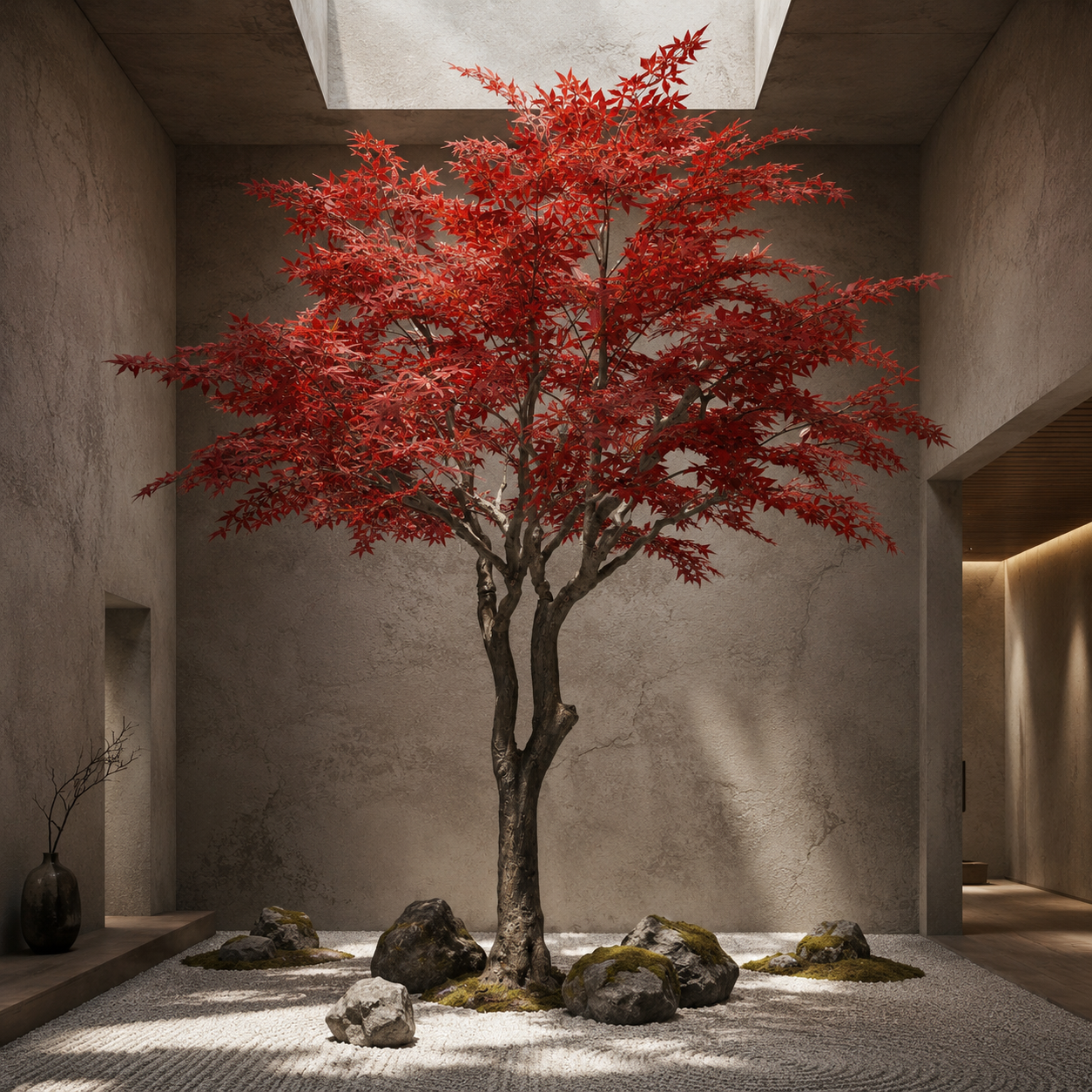
Why blue wool scale matters for buyers
Start by recognizing that colorfastness defines long-term value. The blue wool scale rates how fabrics and pigments resist fading under light; for artificial foliage, it predicts whether leaves will bleach or hold tone. If you’re sourcing from an artificial tree manufacturer, insist on documented blue wool results alongside material specs like PE weight and UV-stabilizer treatment. Those numbers translate directly into appearance retention and fewer replacement cycles.
Step-by-step: comparing blue wool ratings the practical way
1. Collect baseline data: request the blue wool rating (1–8), any UV-stabilizer type, and sample photos after accelerated-light testing. 2. Match rating to use case: treat ratings 1–2 as short-term indoor décor only, 3–5 for mixed indoor/outdoor with some protection, and 6–8 for full outdoor exposure and commercial installations. 3. Cross-check with material: higher-rated results paired with PE/UV-treated leaves and higher leaf density usually outperform low-density alternatives.
Testing contexts that change real-world outcomes
Different light sources and climates matter. A rating measured under xenon-arc lamps can correlate well with outdoor sun exposure; but humidity, airborne pollutants, and reflected heat from nearby glass or concrete also accelerate fading. Manufacturers who exhibit at fairs in Guangzhou and at the Canton Fair often present lab reports—use those as a real-world anchor when negotiating specifications. Also watch for labels like “flame-retardant” and “fade rating”—they indicate additional testing beyond blue wool. —Note that visual samples under store lighting can be misleading when compared to true UV exposure.
Common procurement mistakes and practical alternatives
Buyers often pick by visual texture or price and skip lab verification. That leads to early color shifts in bright storefronts or outdoor plazas. Instead: demand blue wool certificates, insist on UV-stabilized PE for sun-exposed projects, and analyze leaf density and backing construction for resilience. If a supplier can’t produce testing data, consider alternatives such as higher-grade PE blends or laminated leaves with UV inhibitors; these add upfront cost but lower lifetime replacement and maintenance expenses. Also evaluate return and warranty terms tied to fade thresholds.
Supplier checklist — a quick comparative matrix
Use this sequence when vetting factories or dealers: 1) Verify blue wool rating and test method. 2) Confirm UV-stabilizer type and PE resin grade. 3) Inspect sample durability: leaf density, veining quality, and seam/backing. 4) Ask for field references from previous commercial installs. 5) Get clear warranty language about acceptable color loss. Treat these items like spec fields in a front-end form—explicit values reduce ambiguity and speed approvals.
Golden rules for final selection
1) Prefer a blue wool rating of 6–8 for full-sun commercial projects; 2) Ensure the product pairs that rating with proven UV stabilizers and denser leaf construction; 3) Require documented post-install field performance or a warranty tied to measurable fade thresholds. These three metrics will keep maintenance predictable and align cost with expected lifespan. Fresh perspective.

