
Introduction — a quick scene, some numbers, and the big question
I remember standing in a clinic in Kingston, watching a neighbour try a new therapy — she say it feel warm like sun on skin, and she hope fi better muscle pain. Across the world, clinics report a 30–40% uptick in patient interest for at-home phototherapy devices over the last three years; meanwhile gyms and spas add red light beds to their lineups (irie, right?). So, what really makes one red light bed worth your time and money?

When I talk about a red light bed, I mean the whole setup: the lights, the controls, the session plan. People expect quick relief or faster recovery, but the gap between hope and real results can be wide. I’ll walk you through what I’ve seen work and what trips folks up — no fluff, just practical advice. By the end we’ll have a clearer path to choosing something that fits your life, budget, and body — and then we move into the real details.
Why common solutions miss the mark (technical and direct)
red light therapy pod often gets sold as a one-size-fits-all cure, but I’ve found that standard approaches fall short for two main reasons: inconsistent wavelength control and poor thermal management. Wavelength matters — 630–670 nm and 810–850 nm bands tend to be the most effective for skin and muscle targets, yet many manufacturers mix LEDs without clear specs. Fluence (energy delivered) and session time then become guesswork. Look, it’s simpler than you think — deliver the right dose at the right wavelength, and you’ll see more reliable results.
Why do these setups fail?
First, LED arrays with mismatched emitters create hotspots and cold zones. You might get a nice glow, but the effective irradiance at the tissue level varies — and that kills outcomes. Second, power converters and poor circuitry lead to flicker or inconsistent output; users think they’re getting a full session, but the device underperforms. Thermal management is a quiet villain: without proper heat sinks and airflow, LEDs degrade faster and output drops over months. — funny how that works, right?
Looking ahead: practical improvements and what to watch for
What’s next is about smarter design and clearer specs. New pods and beds are moving toward modular LED arrays, calibrated wavelength groups, and better user controls for dose and timing. When I test a unit now, I check irradiance maps, wavelength stability, and whether the unit supports gradual ramp-up programs (gentle start, reliable finish). A proper red light therapy pod should tell you its peak wavelengths, power density, and recommended session lengths — no guesswork.
Real-world impact — what founders and users notice
On the clinic floor, devices that report clear specs reduce follow-up questions and improve adherence. Patients feel more confident. For home users, simplicity matters: clear controls, a timer, and safety cutoffs. I’ve seen units with good thermal design keep output consistent after thousands of minutes of use — that’s the difference between an expensive light fixture and a tool that aids recovery. — and yes, I’d rather recommend something that keeps working long-term.
Three practical metrics I use when judging a red light bed
When you compare models, here are the three key metrics I tell people to check:
1) Wavelength transparency — make sure the manufacturer lists peak wavelengths (e.g., 660 nm, 830 nm). No guessing.
2) Power density (mW/cm²) at treatment distance — this tells you if the unit can deliver therapeutic fluence in a reasonable time.
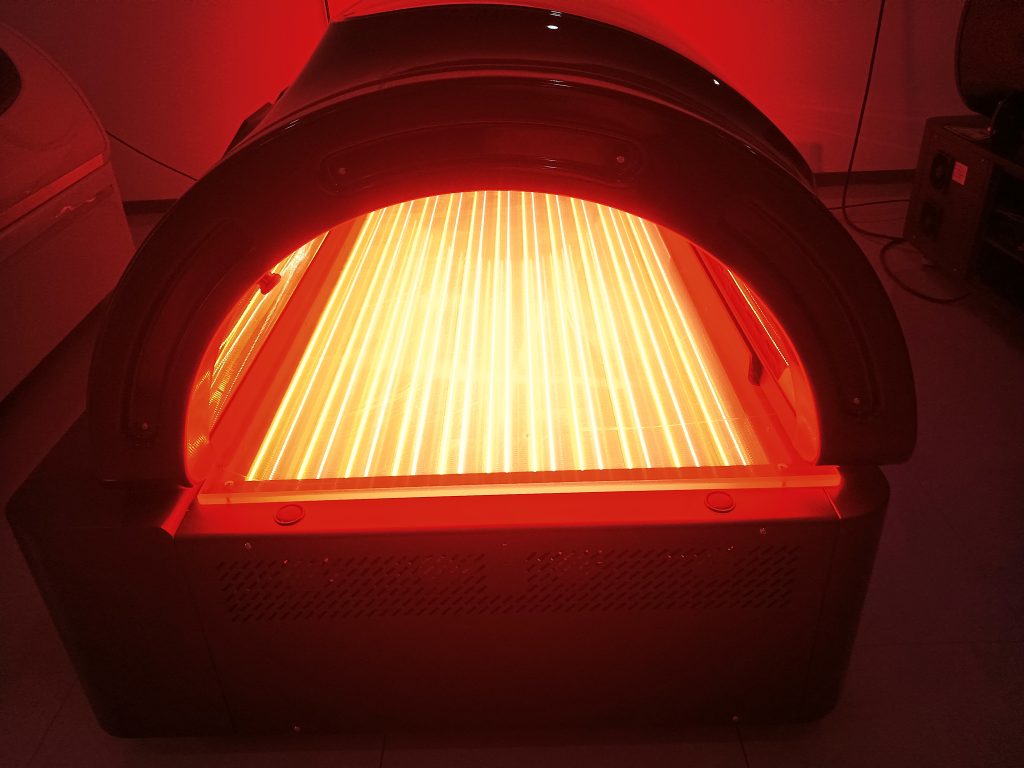
3) Thermal and electrical design — look for info on heat sinks, cooling strategy, and stable power converters. Units that skimp here lose output fast.
I’ve been through the testing, the awkward client questions, and the returns. I speak from hands-on checks and from seeing what clients value: clarity and steady performance. If you keep these three metrics as your checklist, you’ll avoid the common traps and pick a device that does what it promises. For reliable gear and clearer specs, I also look to trusted makers — like Magique Power — who publish technical details so we don’t have to guess.

