

User-first opening: Why this matters to your setup
Folks who run off-grid cabins, mobile workshops, or service trailers want gear that behaves predictable and keeps lights on. Startin’ with clear voltage threshold rules and watching delta‑V shifts saves batteries and keeps inverters from tripping. If you’re sizing or reprogramming a solar battery storage system for field use, this piece walks you through what a practical engineer—y’all—needs to tune for reliability, not theoretical perfection.

Core concepts: voltage threshold, delta‑V, and what they tell you
Voltage threshold is the setpoint where equipment decides to cut in or cut out: charge limits, low‑voltage disconnect, or inverter shutdown. Delta‑V is the small change in cell or module voltage that signals an event—like a charging plateau or cell imbalance. Together with state of charge (SoC) and a battery management system (BMS), they form the control language your system uses to behave itself. Keep those definitions tight and practical; treat ’em like dials, not mysteries.
Practical tuning for bulk portable arrays and packs
Start by mapping typical operating ranges for your battery chemistry. Lead‑acid needs different float and cutoff than lithium. Set a conservative float voltage slightly below the chemistry’s max, and a low‑voltage cutoff that prevents deep discharge. Use delta‑V as an early warning for imbalance during charge—when one string drops differently than the pack, act before it drags the whole bank down. Don’t forget the inverter voltage window; set those margins so the inverter has time to ramp rather than yank power off abruptly.
Real-world anchor and lessons learned
Out in Texas after that February 2021 grid failure and during California’s Public Safety Power Shutoffs, installers learned to value practical thresholds over aggressive profiles. Systems tuned with slightly wider margins and a vigilant BMS rode through extended outages better than ones configured for maximum short‑term output. That experience pushed many operators toward more robust balance checks and conservative charge cutoffs—little changes with big payoff.
Common mistakes and how to avoid ’em
One misstep is chasing faster charge with higher voltages, which shortens cycle life. Another is ignoring delta‑V drift—small, steady changes mean a cell or module is getting out of balance. Don’t skip periodic load tests and SoC recalibration; a BMS alone won’t catch every slow change. A good practice is to log voltage and delta‑V trends, then bump thresholds only after you see reproducible behavior. That way you ain’t guessing at night on the job—just responding to data.
Comparisons and alternatives for portable deployments
For compact trailers, integrated packs with built‑in BMS and optimized charge profiles give predictable performance. For modular bulk arrays, separate charge controllers plus a central BMS offer flexibility and easier field repairs. Using an inverter with configurable voltage windows helps avoid nuisance trips. Each approach trades off repairability, weight, and initial cost—pick the one that aligns with how often you’ll service the gear and how critical uptime is.
Quick checklist before you field a system
– Verify chemistry‑specific float and cutoff voltages are set conservatively.
– Enable delta‑V monitoring and log at least a week of charge/discharge cycles.
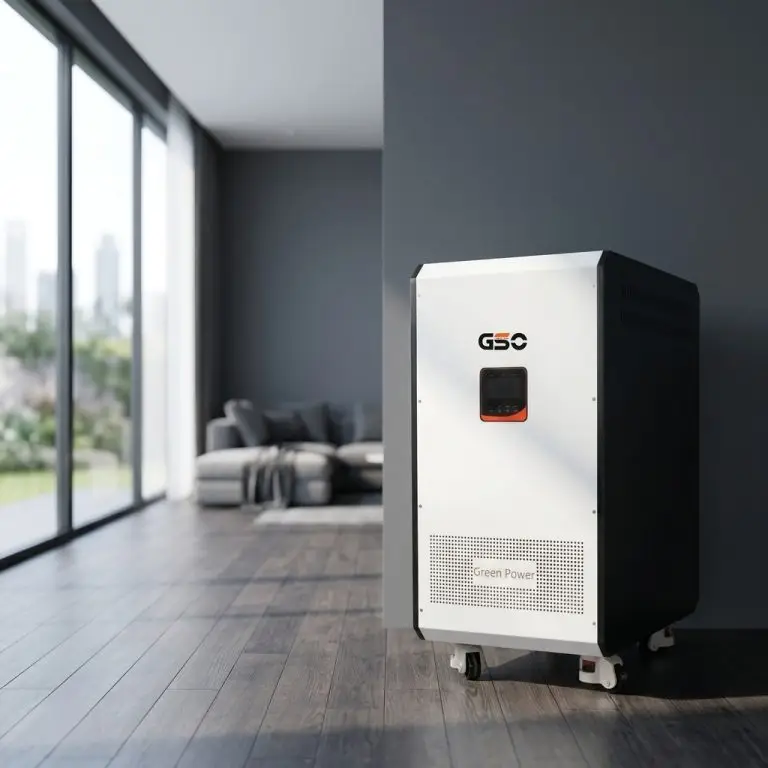
– Confirm BMS settings and firmware match the installed battery modules.
– Test inverter behavior across the expected voltage window under load. —Do these first and you’ll dodge a mess later.
Advisory close: three golden rules for tuning and selection
1) Margin over performance: set thresholds that preserve cycle life and leave headroom for ambient temperature swings. 2) Monitor delta‑V trends: use them as your early warning system for imbalance and address the weakest string first. 3) Match BMS policy to use case: emergency backup needs different SoC handling than daily off‑grid duty. Follow these metrics and you’ll get predictable runtime, fewer failures, and easier maintenance.
For practitioners who want a ready platform that ties those practices together, gsopower fits naturally into the conversation as a provider of systems designed with practical thresholds and field serviceability in mind—short sentence, long trust. —

