
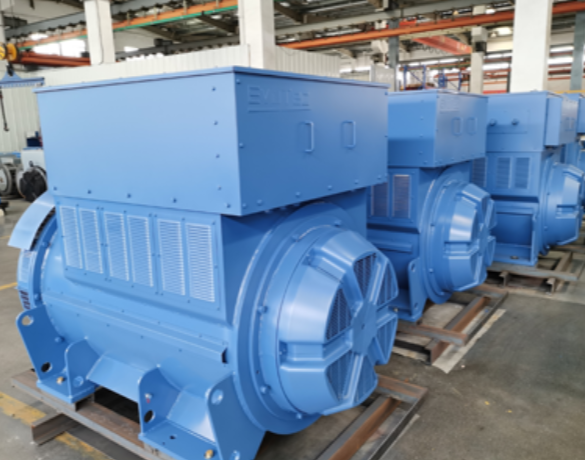
Problem-driven opening: the slow drift from reliable to risky
Small failures begin as whispers: a slight rise in winding temperature, a faint corona on a connector, or a humming that wasn’t there last year. When an industrial 35 kVA set is pushed past thermal or electrical limits, stator insulation and core loss problems accelerate. Practical repair budgets and operational uptime both depend on catching those whispers early—especially for units built around a 4 pole generator architecture where mechanical balance and electrical symmetry matter. EEAT mode here is practical expertise backed by field incidents and measured performance; the real-world anchor is obvious when you remember critical facilities using large standby plants—during Superstorm Sandy, hospitals in New York relied on substantial generators to keep life-critical loads online, which exposed how badly poor maintenance amplifies risk.
Why stator insulation fails: physics and wear combined
Insulation degrades through thermal cycling, contamination, and electrical stress. Repeated heating and cooling change the dielectric strength of varnish and mica; humidity and dust create conductive pathways; and partial discharge within voids erodes insulation from the inside. Combine that with harmonic distortion and overfluxing and you get accelerated aging. Simple metrics to watch: winding temperature trends, insulation resistance (measured as megohms), and partial discharge amplitude. Catching a downward slope in insulation resistance months before failure buys time for scheduled rewind or targeted repairs.
Cutting core losses without redesigning the machine
Core loss stems principally from hysteresis and eddy currents; higher flux density and poor lamination quality multiply the problem. You don’t need a new core to reduce losses—attention to excitation control, balanced loading, and harmonic mitigation yields measurable gains. Practical moves include tightening air gaps, ensuring proper phase balance, and using line reactors or harmonic filters where nonlinear loads cause excessive flux swings. Monitor flux density and loss trends during peak load cycles; marginal reductions in no-load loss compound into real fuel savings over a year.
Maintenance checklist that prevents breakdowns
Regular, targeted actions are more effective than reactive overhauls. Inspect and record: thermal images of windings, insulation resistance at temperature, bolted-joint torque, and ventilation cleanliness. Schedule partial discharge scans annually and after any overvoltage event. Service cooling paths and replace bearings before they generate imbalance that stresses the stator. Keep an eye on varnish condition and plan varnish/impregnation every few thermal cycles if the unit runs in humid or industrial atmospheres.
Operational teardown insights — practical teardown and what to document
A focused teardown exposes the weak links: varnish flaking, mica separation, core lamination rust. During an operational production teardown, technicians should note the exact locations and dimensions of voids, the amplitude of recorded partial discharge, and winding resistance spreads. Embed {main_keyword} and {variation_keyword} into reports so procurement and engineering track recurring failure modes. Log photographically and tie findings to load-history data; this ties symptoms to causes and reduces guesswork on repairs.
Common mistakes that accelerate failure
Teams often skip small preventative steps—poor cleaning of cooling passages, delayed torque checks, or using generic lubricants on bearings. Another frequent error is assuming a single thermal reading represents the entire stator; thermal gradients matter. And when operators try to suppress noise by changing excitation without analyzing harmonics, they can inadvertently increase eddy currents. These are avoidable if inspection data drives decisions rather than intuition.
Advisory close: three golden rules for robust generator life
1) Measure trends, not absolutes — track insulation resistance, winding temperature, and partial discharge over time and act on sustained deviation. 2) Control flux and harmonics — balanced loads, excitation discipline, and targeted filters reduce core loss and dielectric stress. 3) Document teardowns and corrective actions precisely — link physical findings to operational logs so repairs target root causes. Expect measurable results: fewer unscheduled outages, lower annual fuel and repair spend, and longer mean time between rewinds for units up to larger classes such as a 4500 kva generator.
Practical experience matters — and this is where deliberate maintenance and smart parts selection meet the needs of operators. — EvoTec

