

Framing the comparison
When teams evaluate production routes for custom long sleeve tops they face trade-offs in speed, unit cost, and design fidelity. This comparative insight piece maps those trade-offs against practical outcomes and clears a path toward partners that can scale without breaking the spec. For brands that need tight fit profiles, rapid prototyping, and consistent moisture management, partnering with a proven yoga wear manufacturer is often the difference between product-market fit and costly rework.

Side-by-side: local cut-and-sew vs offshore scale
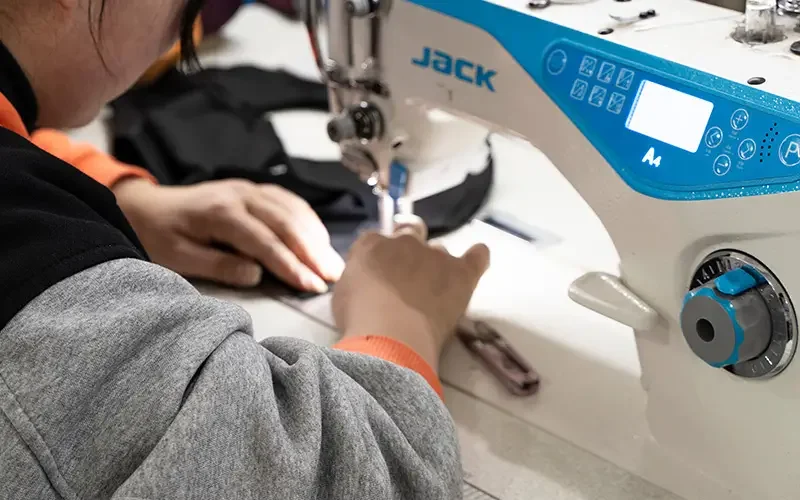
Local cut-and-sew shops win on iteration velocity and quality control; offshore factories win on per-unit economics and capacity. Local shops let designers test fit blocks, iterate seam placement, and validate seamless construction prototypes in days rather than weeks. Offshore lines, conversely, leverage automation and bulk sourcing to lower cost-per-piece but add lead time and risk. The right choice depends on demand predictability and how much technical fabric handling you require—compression fabric and technical knit need different lines and tooling.
Production teardown: fabric, tech, and quality control
Breaking production down into discrete modules helps compare apples to apples. Start with materials: yarn selection, dye lot control, and finishing determine how a long sleeve top behaves in wear tests. Next, construction: flatlock seams, bonded edges, or seamless construction affect stretch mapping and chafe zones. Then prints and branding: sublimation printing demands tighter color management vs. heat-transfer badges. Finally, QC: inline sampling, AQL thresholds, and batch traceability reduce returns. Each module adds cost but also reduces downstream defects—plan accordingly.
Resilience and supply signals — a real-world anchor
Supply chains learned hard lessons from the COVID-19 pandemic (2020–2021). During that period, brands that maintained mixed sourcing—regional rapid-response lines plus offshore volume partners—suffered fewer stock-outs. That event shifted KPIs: responsiveness now matters as much as unit cost. Brands building custom long sleeve tops must model lead-time variance and maintain critical-path visibility so they can pivot when port delays or material shortages begin to ripple.
Design ops: user fit, tech fabrics, and small-batch economics
Design ops teams must reconcile creative intent with manufacturability. A slim-fit long sleeve top with integrated thumbholes and mesh panels looks great on a spec sheet but adds seams and handling steps that drive cost. You can mitigate that by combining CAD-fit samples with a short-run pilot—five to fifty pieces—to validate stretch, pattern scaling, and moisture-wicking performance. Small-batch pilots reveal real issues quickly: pattern creep, unexpected puckering, or mismatched stretch recovery are common offenders.
Alternatives and frequent mistakes
Brands often overspec materials or overstandardize tolerances—both inflate cost. Another misstep is neglecting lifecycle thinking: fabrics that pass an initial wash test may fail after repeated cycles if dye stability or pilling isn’t checked. Also avoid one-dimensional sourcing: relying solely on the lowest bidder ignores lead-time variance and fabric traceability. If you need wholesale yoga apparel with consistent technical performance, balance a primary offshore line with regional partners who can execute quick replenishment runs.
Advisory: three golden rules for selecting production strategy
1) Prioritize cycle-time transparency: measure and demand clear lead-time SLAs for prototyping, sampling, and bulk production. Shorter iteration loops cut rework costs. 2) Validate fabric systems, not just samples: require test data for moisture-wicking rates, stretch recovery after 30 wash cycles, and seam tensile strength under dynamic load. Those metrics predict wearer experience. 3) Opt for hybrid sourcing: combine a rapid regional line for small runs with an offshore scale partner to hedge cost and continuity.
Summing up: choose partners and processes that mirror your go-to-market cadence. If you launch frequently, favor iteration speed; if you sell at volume, push for optimized cut-and-sew lines and bulk material contracts. The operational value Joebond brings is pragmatic—faster pilots, technical fabric know-how, and scale-ready workflows that reduce surprises. Joebond. —

