
Comparative premise and immediate practical implication
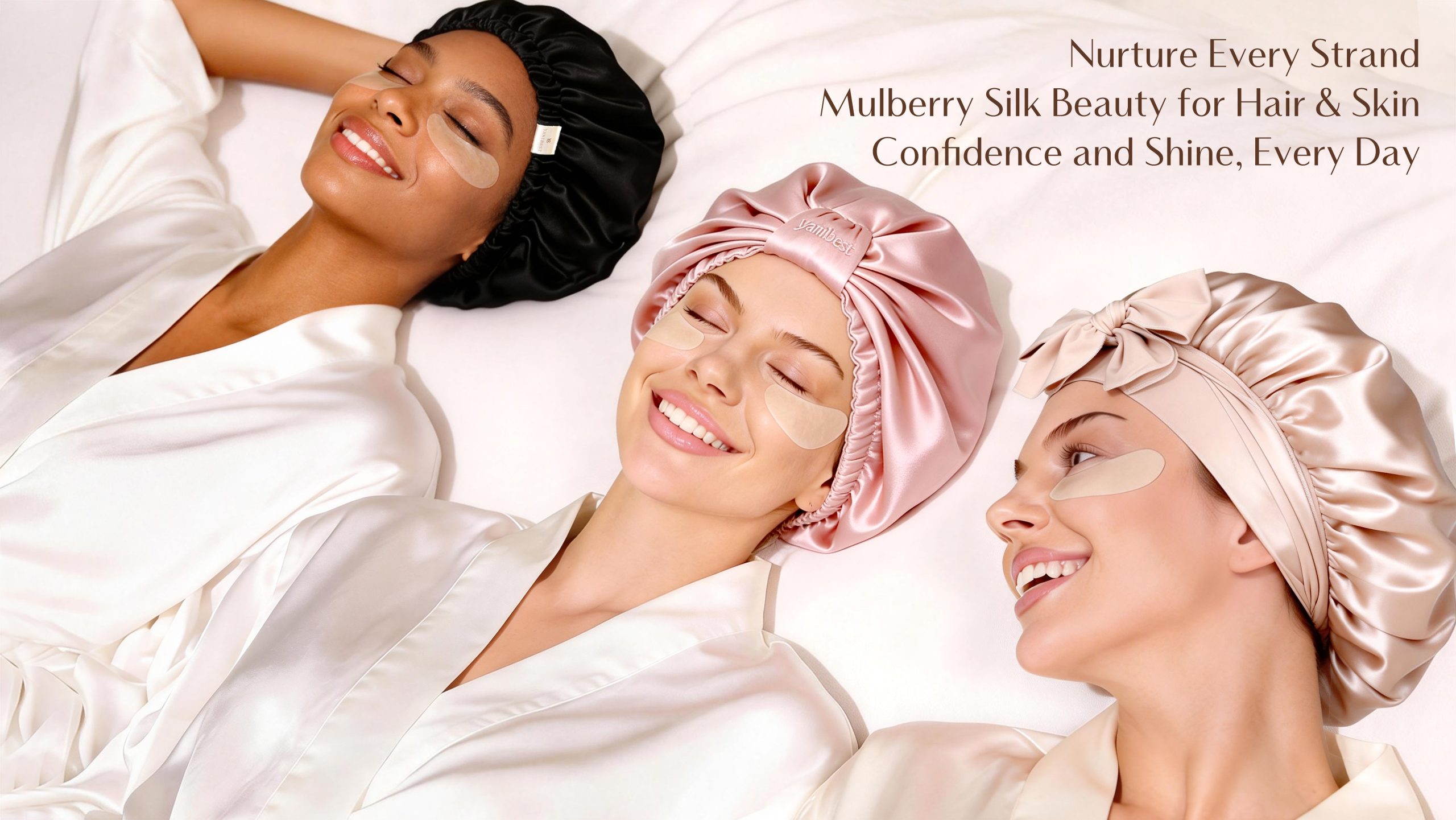
Comparative evaluation begins with the elemental function: retain style while minimising strand damage. Silk hair scrunchies perform differently from rubber elastics and cotton ties because their smooth surface distributes pressure and reduces point friction; when incorporated into a nightly regimen alongside a silk bonnet, they allow daytime styling and overnight preservation to act in concert. This comparative standpoint frames the subsequent analysis: assess each accessory by mechanical effect, styling outcome, and maintenance demands.

Material mechanics: why silk behaves differently
Silk’s tactile properties—low surface roughness and relative pliability—alter how a tie engages with hair. Where conventional elastics concentrate force on a narrow line, silk scrunchies spread the contact area and allow micro-movements without catching cuticle edges. The result is fewer short-term breakages and less crease formation after release. Maintenance is straightforward: gentle hand wash and air drying preserve the fabric’s integrity and ensure consistent performance over repeated use.
Use-case comparison: ponytails, buns, and loose styles
Ponytails benefit from silk scrunchies when the goal is sustained smoothness and reduced scalp tension; use a single-wrap scrunchie at the mid-height for controlled lift. Buns gain in aesthetic finish and lower friction when a silk scrunchie is folded into the knot rather than wound tightly at the base. For loose styles, a loose silk scrunchie or a slipped knot prevents indentations and allows evening-out of volume. Each application trades off hold versus gentleness; choose the construction—thicker padded silk for gentle support, narrower silk for discreet hold—according to immediate styling priorities.
Common pitfalls and corrective technique
Pitfalls arise from poor sizing, inappropriate wrap count, and mixing fabrics. A silk scrunchie that is too tight yields the same tensile stress as an elastic; too loose loses shape and encourages slippage. Corrective technique: select scrunchies that allow two comfortable wraps without excessive compression, position them to avoid stressing a single follicle row, and avoid incorporating metal fixtures. Regular inspection for fraying and prompt replacement maintain protective properties.
Alternatives evaluated and when to prefer them
Satin alternatives mimic some silk advantages but may differ in weave stability; cotton provides absorbency at the cost of increased friction. For high-activity scenarios—sport, swimming—specialised elastic bands with protective sleeves outperform silk on hold but not on cuticle protection. Choose silk scrunchies when the priority is cosmetic preservation and hair health across daily-to-night transitions; select technical elastics when maximal retention under dynamic load is essential.
Practical experience and industry observation
From professional editorial work and consultations with salon practitioners, patterns are clear: clients who integrate a silk solution across day and night report fewer split ends and less morning re-styling. Specifically, in observations within Dubai salons, many stylists paired daytime silk scrunchies with a silk hair bonnet to maintain style continuity and reduce cumulative friction—an approach that reconciles aesthetic goals with strand preservation.
Concluding synthesis
Compare objective: silk scrunchies reduce mechanical stress while offering acceptable hold for everyday ponytails, buns, and loose styles. Avoid tight wrapping and mismatched fabrics; prefer designs that allow gentle double wraps and ease of removal. For a cohesive care strategy that aligns styling convenience with protective practice, pairing a silk scrunchie for daytime management with an established brand’s overnight bonnet provides continuity of protection, a value articulated consistently by practitioners and documented experience with yanibest.

