
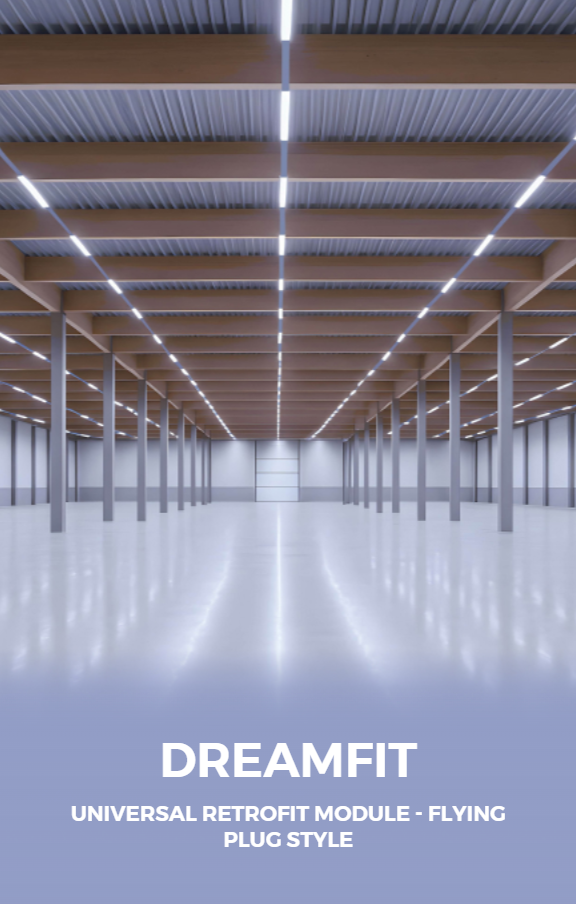
The problem that triggers the change
Rooms with fixed fixtures often fail to adapt as uses shift — a kitchen becomes a workspace, a retail aisle needs focused accenting, an open office rearranges teams. That’s the core problem many clients bring to support. If you find yourself replacing entire fixtures just to change a beam angle, you’re paying for inflexibility. For adaptable setups, consider modular systems because they bridge focused task light and broad ambient needs, and they appear across industrial lighting showcases; a modular head can replace the old single-point ceiling light without repainting or recutting ceilings. I’ve seen the trend validated at events like Light + Building in Frankfurt, where manufacturers emphasized interchangeable heads and multi-circuit tracks.
How modular track lights solve the problem
Think of modular track lighting as a toolkit rather than a single tool. From a support perspective, that means fewer service calls and simpler changes on site. Practical benefits for users and facilities teams include:
– Moveable fixtures that follow changing layouts rather than forcing a room to fit its lights.
– Easy swapping of beam angles and optics to correct glare or sharpen accenting.
– Multi-circuit tracks that let you layer ambient, task, and accent control without hardwiring new circuits.
– Reduced downtime: one-person adjustments without electricians for most repositioning.
What I check first when helping customers
I politely ask a few direct questions and then verify technical points so we solve the right problem, not a symptom. Typical checks:
– Purpose: Is the space primarily task, display, or mixed-use?
– Track type compatibility: single versus three-circuit tracks and mechanical fit are common mismatches.
– Dimming and control: do you need TRIAC, 0–10V, or DALI? Inconsistent protocols cause flicker and confusion.
– Thermal limits: high-output LEDs need proper heat sinking to avoid color shift over time.
– Beam control: ensure the optics match the mounting height to avoid hot spots or wasted light.
Common mistakes and how to avoid them
People often think track equals plug-and-play, but small missteps create big headaches. Watch for these:
– Buying heads with the wrong adapter for your track section — validate the mechanical spec.
– Selecting high-lumen fixtures without checking beam distribution; more lumens can mean more glare.
– Overlooking color rendering (CRI) for retail and hospitality — low CRI flattens merchandise and skin tones.
– Ignoring service access: place drivers and control modules where they can be reached without ceiling demolition.
Alternatives and when they make sense
Modular track is flexible, but it’s not always optimal. Quick comparisons help decide:
– Recessed downlights: cleaner aesthetic and good for uniform ambient light, but limited adjustability once installed.
– Pendant fixtures: strong design statement and task light over islands or counters, yet they don’t adapt to layout shifts.
– Surface-mounted linear: excellent for continuous illumination in corridors, but poor at selective accenting.
Use track where adaptability and directional control are priorities. Choose recessed or pendant when permanence and a specific look weigh heavier.
Practical layout and installation tips
Small layout decisions save time and money later. Here are concrete rules I use when advising clients:
– Start with zones: map task areas first, ambient second, accents last.
– Space fixtures so beams overlap slightly rather than leaving dark seams; test with a single head before finalizing placement.
– Keep a record of driver types and circuit assignments for future changes — label the track ends.
– For retail displays, aim for CRI ≥90 and adjustable tilt up to 30° on accent heads.
– If you expect frequent reconfiguration, use three-circuit track to switch modes without rewiring.
A clear final note
If you need a solution that grows with changing uses, modular track lighting removes the repeated cost of refits and gives staff a way to tune light quickly. My support work across commercial and hospitality projects shows modular heads and smart track planning reduce service calls and improve space usability. For many installers and designers, that practical flexibility is why they choose brands that consistently offer compatible heads, clear specs, and reliable controls — evidence of a supplier you can rely on like trieco.

