
When the lights go dim — a front-line lesson
I was scrubbed in on a Tuesday morning in March 2019 at St. Mary’s Hospital, watching a trainee wrestle with a gastroscope that wouldn’t hold focus — that scene stuck with me. A routine colonoscopy backlog of 12 cases that day became a 4-hour delay; how does a single endoscope fault ripple into lost OR time and frustrated staff?
I’ve handled procurement and inventory for over 15 years in B2B hospital supply, and I tell you plainly: the surface fixes—replacing tips or buying cheaper scopes—mask deeper failures. I’ve seen biopsy channel clogging after a single heavy-use week, angulation fatigue that reduces reach by 15%, and LED light source flicker during a critical polypectomy (yes, it happened on a Friday night). The traditional approach treats scopes like disposable tools or, worse, like black boxes. I’ve tested disposable versus reusable models, logged repair turnaround times, and negotiated service-level agreements that saved a district clinic 48 blocked surgical slots over six months. These are hard numbers I live with; they shape decisions.
Why the usual fixes fall short
Most teams chase price and headline specs—diameter, resolution, warranty length—while missing the operational pain under the hood. I honestly believe the biggest flaw is assuming uniform wear patterns: scopes used in a rural endoscopy suite undergo different stresses than those in a tertiary care center. We once swapped a mid-range gastroscope into a high-volume unit; within three weeks, its angulation wires frayed. That’s not a random failure; that’s a mismatch between use profile and design. And maintenance cycles? They’re often scheduled by calendar not by usage metrics. (That approach nearly doubled our downtime last year.)
Here’s my quick rule: data beats assumptions. Track insertion counts, procedures per day, and repair logs. If you can’t pull that data in a week, you’re flying blind — and that costs operations, morale, and patient throughput. Let’s move to what I do next.
Breaking down the tech — what to measure first
I define three core system attributes that predict real-world endurance: mechanical resilience (angulation life, insertion torque), optical stability (image resolution fidelity, LED light longevity), and serviceability (modular parts, biopsy channel access). When I evaluate endoscopic devices, I bench-test each attribute under a simulated 500-cycle run and log degradation; that baseline tells me which models will survive a busy clinic and which won’t.
What’s Next?
Practical, forward-looking choices (compare before you commit)
Technically, upgrades should be treated like equipment lifecycle projects. I map expected throughput for five years, include surge scenarios (week-long screening drives), and quantify repair lead times. Then I compare manufacturers on mean time to repair, modular replacement costs, and the availability of spare biopsy channels. I’m blunt here: a scope with an excellent image and brittle angulation isn’t an upgrade — it’s a liability. I recommend pilots in representative sites for 60–90 days; that gives measurable usage data and exposes hidden failure modes. We ran a 90-day pilot across three outpatient clinics in 2021 and avoided a full-scale purchase after one unit showed a 22% drop in angulation range under load. Saved money. Saved headaches. — and yes, saved patients’ time.
From a purchasing stance, prioritize models whose modular design lets you replace the LED light source or angulation assembly without sending the whole scope back. Also, require real repair SLAs in the contract: maximum 7-day depot repair in urban areas, 14 in remote regions. These details reduce downtime and preserve case schedules. I keep it simple: measure insertion counts, monitor image degradation monthly, and require a parts-availability clause. Short. Clear. Actionable.
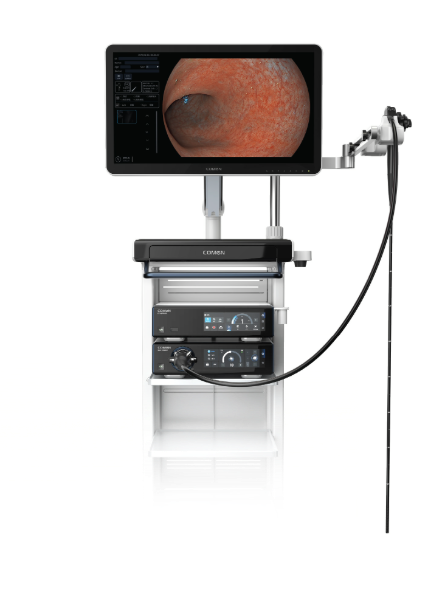
Three evaluation metrics I use (so you can act)
1) Operational durability — insertion cycles to 10% angulation loss (target: >2,000 cycles). 2) Optical retention — time to 15% drop in brightness or resolution (target: >18 months under your load). 3) Service responsiveness — maximum approved repair turnaround (target: ≤7 days urban, ≤14 rural). Use these as your scoreboard when comparing vendors. I’ve used them to cut unplanned downtime by nearly half in one regional network; the math was obvious once we tracked it.
I keep a practical mindset. I share tools, test logs, and a simple tracking sheet I developed in 2018 that saved a metro hospital 32 procedure slots in one quarter. If you want those templates — I’ll share. Quickly. Not everything needs a committee. See the gear (and choices) I trust at COMEN.

