
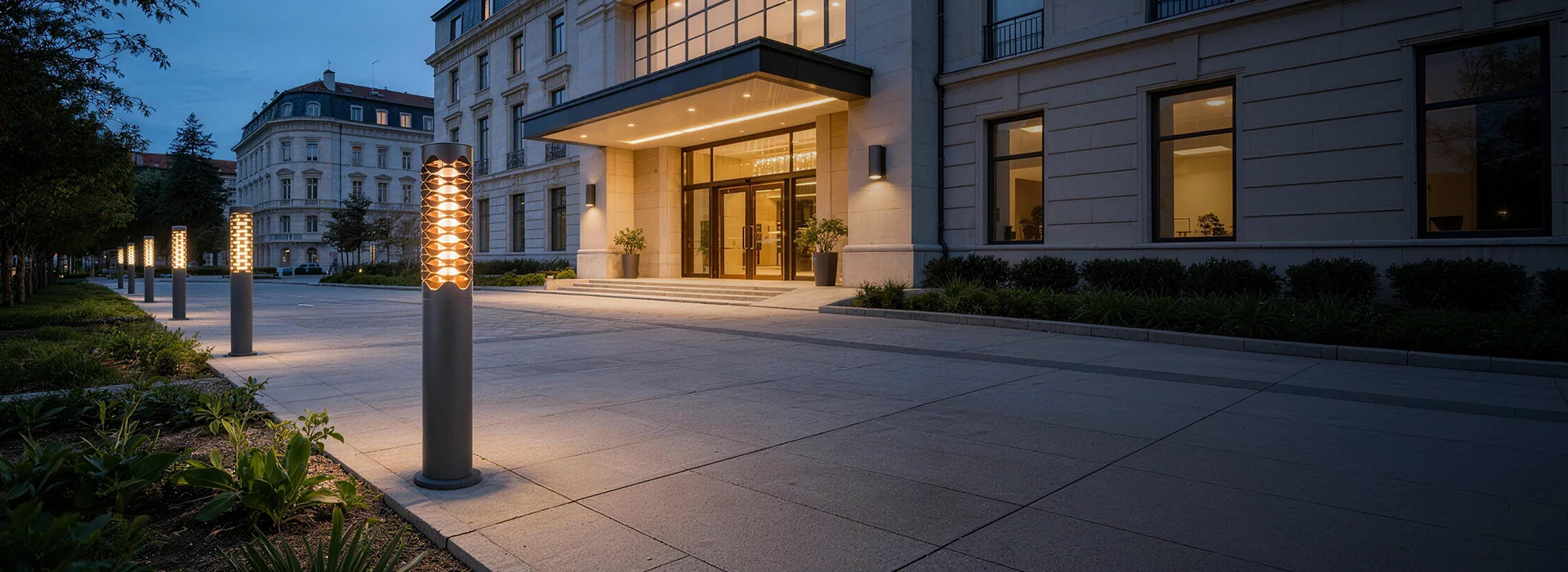
The immediate problem: dimming, failures, and surprise service calls
When commercial outdoor LED wall sconces start flickering or failing prematurely, the culprit is rarely the pretty fixture — it’s the electrical compromises nobody planned for. Long runs, undersized conductors, and weak surge protection combine into a headache that shows up as low lumen output, premature driver failure, and unhappy tenants. If you’re spec’ing site lighting alongside bollard lights for a campus or streetscape, you want to sort these constraints before the first install — not after the first warranty claim.
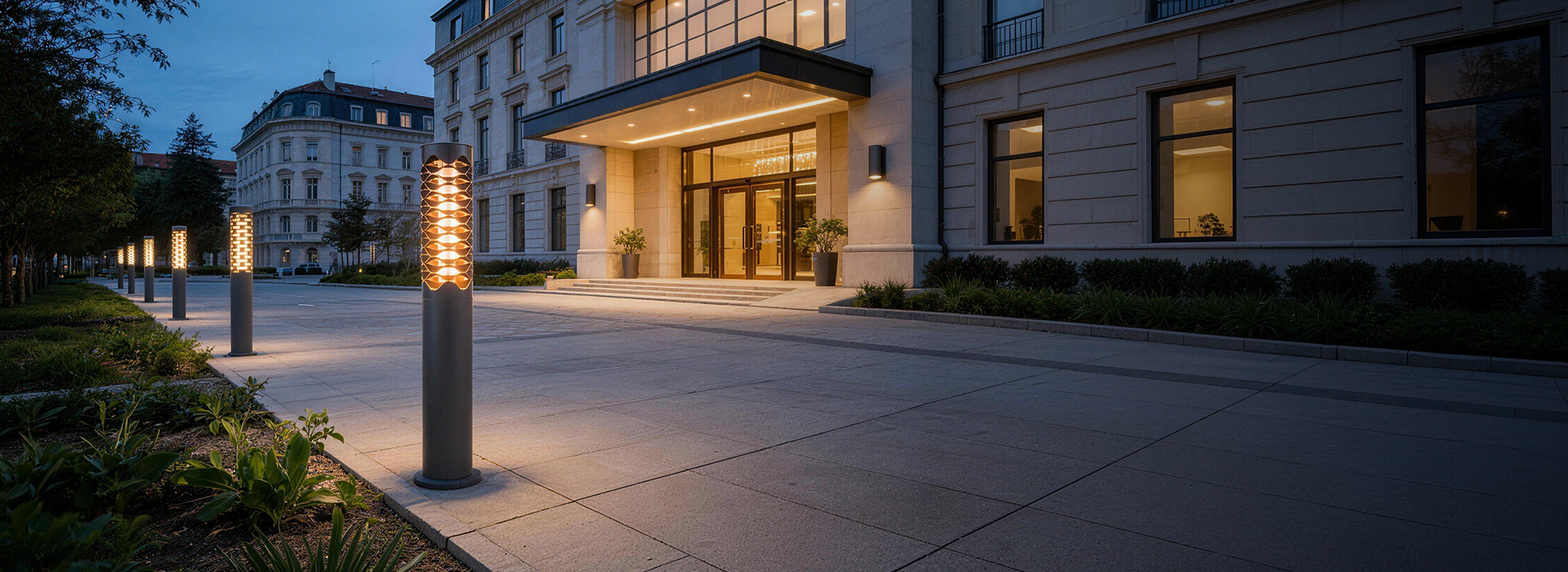
Why voltage drop and surge protection matter on commercial installs
Voltage drop reduces effective voltage at the fixture, causing LEDs to run dimmer and drivers to run hotter. Surge events — from utility switching or lightning-induced transients — stress the LED driver and can kill the fixture instantly. Combine those two and you get shorter lifetimes, higher maintenance, and higher lifecycle cost. In commercial specs, the LED driver and wiring plan are as critical as the fixture finish. Think in terms of wattage, driver ratings, and expected lumen output over time, not just initial brightness.
Key technical constraints to watch
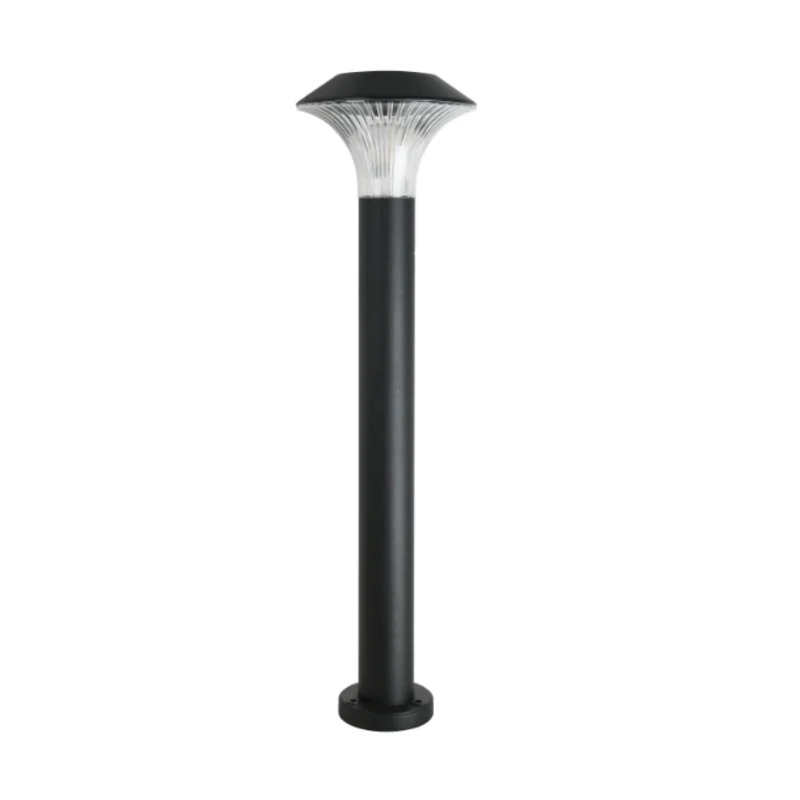
Pay attention to three technical areas early: conductor sizing and run length (voltage drop), surge protection (SPD ratings and clamping voltage), and enclosure ingress protection. Voltage drop is roughly (I x R) across the run — so higher current or thinner wire equals more drop. Surge protection should match the site’s exposure and the LED driver’s transient tolerance; a driver with low surge immunity but no upstream SPD is a ticking bomb. And don’t forget the IP rating: an IP65-rated seal keeps out dust and low-pressure water jets — crucial when you specify fixtures or an ip65 lawn lamp for pathways.
Real-world anchor: what IP65 really means
IP65 is not marketing fluff — per IEC 60529 it means dust-tight and protected against water jets from any direction. That standard matters on coastal installations or plazas with frequent pressure washing. If the spec calls for IP65 and the fixture is only IP44 at the terminal connection, you’ll get corrosion in short order. Match enclosure rating to environment, and verify sealing method at the wiring entry — that’s where most failures start.
Common mistakes in specification and installation — and how they bite
People often skimp on wire gauge to save on copper, assume the LED driver inside the sconce will handle everything, or rely on a single cheap surge strip at the service entrance. That’s optimistic. You need tiered surge protection and a calculated conductor schedule. Also—field wiring practices matter: loose grounds, poor terminations, and zip-tied neutrals make for intermittents that look like ghost issues. Route runs neatly, derate for temperature if conduits run hot, and never guess at allowable voltage drop for long feeder legs.
Practical checklist for designers and contractors
Use this short checklist during design and bid review:
- Calculate voltage drop per run (keep under 3–5% at full load for long runs).
- Specify LED drivers with known surge immunity and compatible power factor correction.
- Design layered surge protection: service entrance SPD + localized SPD near critical panels.
- Match IP rating (IP65 where jets or washdowns occur) and inspect terminal seals.
- Test with actual fixture-and-driver assemblies on the intended run length before full install.
On-site lessons and simple tests
Before you commit: measure voltage at the farthest fixture under simulated load. Swap in a spare driver if the fixture behaves differently — sometimes the driver, not the LED module, is the weak link. Run an inrush-current check on startup; big capacitor banks in drivers can spike and cause nuisance tripping upstream. And schedule a post-install thermographic scan after the first month — you’ll catch overheated drivers or undersized conductors early. Small checks save big retrofit bills — and fewer midnight service calls.
Common alternatives and when to choose them
If long runs are unavoidable, consider remote drivers mounted near the service panel with low-voltage runs to fixtures — that reduces voltage drop but adds complexity in IP sealing and conduit. For high-exposure sites, prefer fixtures with replaceable IP-rated driver compartments rather than fully sealed integrated units. And if you’re doing mixed site lighting — sconces plus pathway bollard lights — unify surge protection strategy across both circuits to avoid cascading failures.
Advisory: three golden metrics to evaluate before sign-off
1) Voltage Drop Budget: target maximum 3% drop at the farthest fixture at full load — calculate using actual driver current and conductor length. 2) Surge Tolerance: specify SPD with clamping voltage below the driver’s maximum transient rating and include coordinated upstream protection. 3) Environmental Fit: confirm enclosure rating (IP65 where required) and verify field sealing at cable entries.
Wrapping up — practical value and where to look for help
In short, solving voltage drop and surge issues is about integrating electrical engineering with good product selection and installation discipline. Get the conductor schedule, driver spec, and surge plan right up front, and the rest — fixture selection, finishes, and warranty — falls into place. For projects where durability and consistent performance matter, practical vendors who understand these constraints and offer tested IP65 solutions can save time and money. Keyida sits in that space — experienced with site realities and product choices that align with real-world standards. —

