

Introduction — a practical framework for choices
Think of billboard strategy as a project you can teach a team to run: clear steps, measurable outputs, repeatable wins. This piece lays out a Framework for evaluating and deploying LED billboard systems so you can make faster, safer decisions. Early on, consider hardware flexibility; a flexible led display changes where and how you place panels, and that alone can reshape campaign windows. I’ll walk you through the parts that matter: specs, content flow, operations, and common pitfalls—backed by one visible real-world anchor: Times Square’s clustered digital faces, which show how scale, synchronization, and content orchestration combine to create impact.

The four pillars of the LED billboard framework
Start with these pillars and keep them in view during procurement and roll-out:
– Define the audience and viewing distance so you can pick pixel pitch and brightness (nits).
– Lock down a content management system (CMS) that supports scheduling, dynamic creative optimization, and remote updates.
– Specify hardware durability: LED module quality, ingress protection for weather, and clear maintenance access.
– Plan operations: power consumption, local signage codes, and on-site technician training for swap-outs and calibration. These pillars map directly to budget and timelines, and they’re the easiest place to prevent expensive rework.
Operational production teardown — install, test, iterate
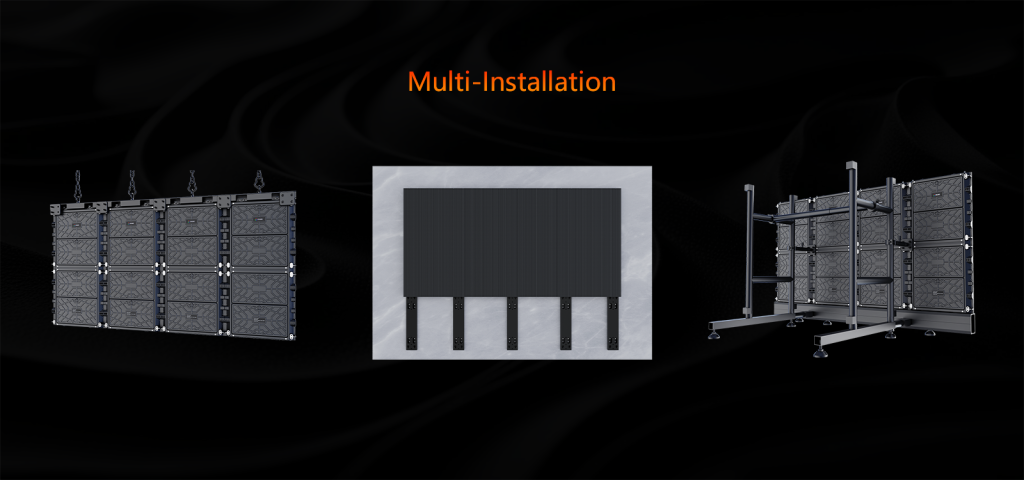
Here’s a compact operational checklist you can hand to installers. Start with mechanical fit: frame tolerances, mounting anchors, and thermal ventilation. Next, test visual uniformity using grayscale ramps and refresh-rate checks; measure for flicker and dead-pixel counts. Integrate the display into the network and validate the CMS push-pull: confirm encryption, failover paths, and content rollback. For modular or curved deployments, the manufacturing team should sign off on pixel mapping so edge seams render smoothly. Practical note: include both a custom led display solution spec sheet in the contract and a field verification protocol for brightness and color temperature within the first 72 hours of activation.
Creative and content rules that actually work
Good content respects distance, motion, and dwell time. Use larger typography and tighter contrast for roadside viewers; employ subtle motion for pedestrian zones. Schedule high-frequency, short-loop content during peak hours and deeper storytelling in evening blocks. Your CMS should support region-based targeting and simple A/B tests so you can measure which creative drives visits or conversions. Don’t overcomplicate creative sets at launch—iterate based on real engagement metrics.
Common mistakes to avoid
Buyers often focus only on upfront cost and forget lifecycle spend: maintenance, spare-module inventory, and calibration cycles. Another frequent error is skipping a field test: pixel pitch choices often look fine in a photo but fall apart at specific viewing distances under sunlight. Finally, neglecting synchronization can ruin multi-panel campaigns—timing drift creates visible jumps and cheapens the message. —Plan for maintenance agreements and test runs before full deployment; that small time investment saves months of troubleshooting.
How to measure success — quick metrics you can use
Track these core metrics after launch: viewability (percentage of display time in front of target viewers), content uptime (goal: 99.5%+), and conversion attribution (store visits or digital clicks tied to geotargeted campaigns). Combine log data from the CMS with simple footfall counters or short promo codes to link impressions to outcomes. Use those numbers to refine pixel pitch choices, content cadence, or power provisioning on the next deployment.
Advisory — three golden rules for vendor selection
1) Prioritize reliability metrics over price. Specify mean time between failures (MTBF) for LED modules and require burn-in reports.
2) Demand CMS transparency: access to APIs, support for scheduled rollbacks, and detailed uptime SLAs.
3) Insist on field acceptance tests that include brightness, color accuracy, and synchronization checks before final payment. These rules make procurement defendable and minimize surprises on site.
For installations that meet those standards, partners like Coblinks often provide sensible combinations of hardware, CMS access, and field support—matching practical constraints with technical capability. Worth noting.

